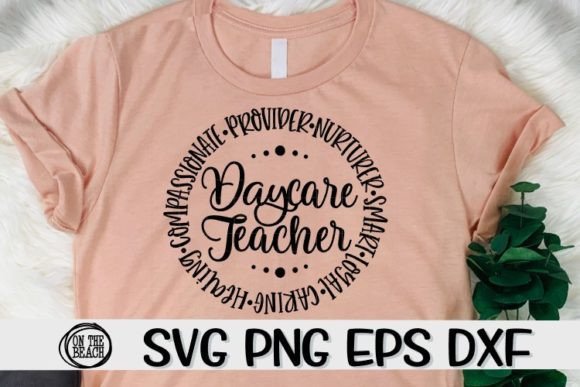
Daycare Teacher SVG: Embroidery Design Review
As a professional designer and product reviewer who spends countless hours testing digital assets for real-world production, I approach every new file with a critical eye. When evaluating the Daycare Teacher SVG Cutting Sublimation design, my primary focus is not just on how it looks on a screen, but how it translates into a tangible, high-quality finished product. Daycare teachers embody qualities of patience, creativity, and resilience, and any merchandise created for them must reflect that same level of care and durability. This review breaks down the practical application of this graphic for embroidery professionals, Etsy sellers, and craft business owners looking to create meaningful custom apparel and personalized gifts.
First Impressions and Visual Personality
Upon opening the digital embroidery file, the immediate impression is one of warmth and approachability. The layout typically associated with daycare teacher graphics balances playful elements with legible typography, creating a mood that is professional yet nurturing. For an embroidery project, this visual personality is crucial. It signals to the end customer that the item was designed specifically for their profession, rather than being a generic template. As T-Shirt Designs go, this category relies heavily on emotional connection. The shape and detail level in this collection appear optimized for visibility, which is essential when converting vector graphics into stitch-based art. The design assets here feel curated for recognition, ensuring that even from a distance on a busy playground or in a classroom, the message remains clear and impactful.
Real-World Application: The Custom Sweatshirt Test
To truly judge the viability of the Daycare Teacher SVG Cutting Sublimation file, I mentally simulated a common client request: a custom embroidered sweatshirt for a lead teacher’s birthday. In this scenario, the design needs to perform on fleece fabric, which presents unique challenges compared to standard cotton tees. Fleece has a pile that can swallow fine details, so the stitch density and underlay become paramount. If utilizing this as an applique design, the satin stitch borders must be wide enough to secure the fabric edge without cutting through the fleece base. For fill stitch areas representing icons like books, crayons, or hearts, the stitching must have adequate pull compensation to prevent the design from distorting during the hooping process.
In this real-life case, the goal is a handmade product that survives weekly washing while maintaining its boutique appeal. Customers trust that a personalized gift will look as good after ten washes as it did fresh out of the hoop. By visualizing this sweatshirt embroidery project, it becomes clear that this design serves best as a center chest placement or a left-chest logo size. Attempting to stretch it across a full back might compromise the stitch clarity on textured fabrics, whereas a focused, smaller footprint ensures the running stitch outlines remain crisp and the overall aesthetic stays polished.
Navigating Fabric Challenges and Hoop Limitations
While this graphic excels in many areas, experienced makers know where to exercise caution. When adapting Daycare Teacher SVG Cutting Sublimation for different mediums, fabric texture dictates success. Thin fabrics like baby clothes or lightweight tea towels require a lighter touch; excessive stitch density can cause puckering or tearing. Conversely, stretchy knits demand robust stabilizer choices to maintain registration between color changes. If you are planning nursery decor or baby embroidery items, verify that the smallest text elements are above 4mm in height. Anything smaller risks becoming illegible once thread tension is applied.
Hoop size is another critical constraint. While the original file may be scalable, reducing it for an embroidered patch or a cap requires simplifying internal details. Caps introduce curvature that can distort flat designs, so testing on a curved surface is mandatory before commercial production. Dark fabrics also present a challenge; if the design relies on subtle shading intended for sublimation, those nuances may be lost in embroidery unless you adjust thread colors for higher contrast. Always inspect detailed corners and tiny lettering in your embroidery software before stitching. What looks perfect in a printable mockup may need manual digitizing adjustments to function as a viable machine embroidery design on challenging substrates.
Impact on Product Value and Brand Consistency
Using high-quality, purpose-built graphics like this directly influences buyer engagement and perceived value. For Etsy sellers and small shop product lines, consistency builds brand recognition. When customers see that your daycare teacher merchandise consistently features clean stitching, appropriate sizing, and thoughtful design placement, they develop trust in your craft business. This specific design category bridges the gap between novelty and professionalism. It avoids the chaotic clutter of low-quality clip art, offering instead a refined look that justifies a higher price point for custom apparel.
Furthermore, the versatility of this graphic extends beyond clothing. Consider holiday embroidery projects for staff appreciation weeks or end-of-year gifts. The same core design elements can be adapted for tote bag designs, kitchen towels, or pillow covers, allowing you to offer a cohesive collection. This maximizes the return on your design assets and provides clients with matching sets, increasing average order value. However, always confirm licensing terms before selling finished products or digital files. Ensuring you have the right to use the Daycare Teacher SVG Cutting Sublimation for commercial embroidery protects your business and respects the original creator’s work.
Essential Designer Notes for Production Success
Before launching this design into your production queue, adhere to these practical checkpoints to ensure professional results:
- Test on Scrap Fabric First: Never stitch directly onto a final garment without a test run. Use similar fabric weight and texture to check for registration issues or density problems.
- Verify Thread Color Contrast: Ensure your chosen thread colors provide sufficient contrast against the garment color. Subtle pastels may disappear on white fabric, while dark threads may lack definition on navy sweatshirts.
- Review Stitch Density: Check if the file includes proper underlay for your target fabric. Add mesh underlay for knits and edge runs for appliques to prevent shifting.
- Confirm Hoop Size Compatibility: Measure the actual stitch area in your software. Do not assume the design fits your hoop just because the bounding box looks correct; account for basting stitches and alignment marks.
- Inspect Small Details: Zoom in to 100% view to check for overlapping stitches or gaps in satin columns. Manually adjust node points if necessary to smooth out jagged edges.
- Utilize Black and White Mockups: Before committing to color, view the design in grayscale to assess value contrast. This helps identify areas where details might blend together visually.
- Select Proper Stabilizer: Match your stabilizer to the fabric stability. Use cut-away for stretchy apparel and tear-away for stable woven goods like tote bags or tea towels.
- Check Licensing for Commercial Use: Re-read the product description regarding personal versus commercial rights. Document your license purchase for future reference if selling on platforms like Etsy.
By treating the Daycare Teacher SVG Cutting Sublimation file as a starting point for professional craftsmanship rather than a plug-and-play solution, you elevate the final output. Whether creating a single personalized gift or a full line of boutique merchandise, the attention to technical detail is what separates hobbyist work from professional-grade embroidery. This design holds significant potential for celebrating educators, provided the maker applies sound judgment regarding fabric interaction, scale, and finishing quality. Ultimately, the success of any embroidery project lies in the harmony between digital intent and physical execution.